
A cargo trailer spends most of its working life parked. It sits in the customer’s driveway while the crew mows, at the curb while the fence goes in, and in your lot overnight. Every one of those hours, a 12 or 16 foot panel is facing the street with nothing on it.
This guide covers what we ask about when someone brings an enclosed or cargo trailer to our Victoria shop: how much of it to cover, what moves the price, and how to lay it out so people remember the phone number.
Full wrap, partial wrap, or lettering
Most trailer jobs land in one of three groups. They cost different amounts and do different jobs, so pick based on what the trailer needs to say.
Full wrap
Printed vinyl covers every side panel, the front, and the rear doors. The trailer’s original color disappears. A full wrap gives you room for photos, backgrounds, and bold color, and it hides scuffs and old decals underneath. It is also the most vinyl, the most print time, and the most labor, so it costs the most.
Partial wrap
Printed graphics cover part of each side, often the rear half or a band through the middle, and the trailer’s own finish fills the rest. On a silver or white aluminum trailer this can look as finished as a full wrap for a good deal less material.
Lettering
Cut vinyl in one or two colors: company name, phone number, and license or USDOT number. No printed background. This is the least expensive option. It works well for a fleet of plain trailers that just need to be identified.
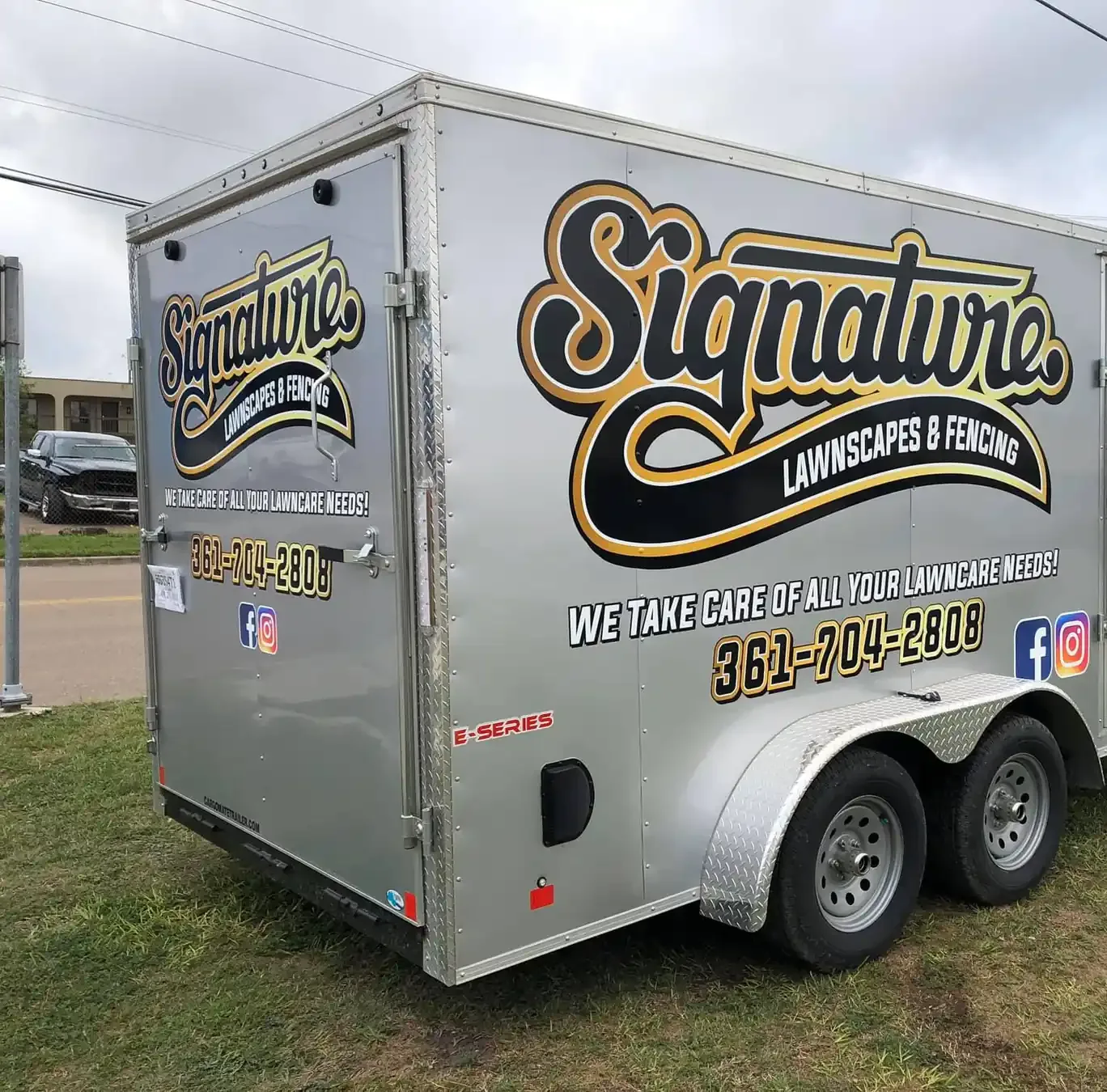
The Signature Lawnscapes and Fencing trailer at the top of this page sits between the last two. The logo and slogan are printed, the silver trailer shows around them, and the phone number repeats on the rear door.
What sets the price
We do not publish a price list, because two trailers of the same length can quote very differently. These are the things that move the number:
- Size. Length matters, but height matters too. A 7 foot tall interior trailer has a lot more side panel than a standard height one of the same length.
- Coverage. Full, partial, or lettering, as above.
- Front and doors. A V-nose front has more shape to wrap than a flat front. A ramp door and a set of barn doors are laid out differently.
- Surface condition. Old decals have to come off before new vinyl goes on. Dents, heavy oxidation, and failing paint all affect how well vinyl sticks.
- Design work. Bringing a finished logo in vector format (AI, EPS, SVG, or a PDF from your designer) costs less than building a logo from scratch.
To get an accurate quote, send us the trailer’s length and height, whether the front is flat or V-nose, the door type, and a straight-on photo of each side and the rear.
Laying out a landscape or contractor trailer
A parked trailer gets a few seconds from someone walking a dog or driving past. The layout has to work in that time. On the work trailers we wrap, these four things do most of the selling:
- Company name or logo. The biggest element on the panel.
- What you do. Three or four words: “Lawn care, fencing, irrigation.” A list of twelve services turns into wallpaper.
- Phone number. The second biggest thing on the trailer. Put it on both sides and the rear door, because the rear is what drivers stare at in traffic.
- License number, if your trade requires one.
Website and social icons are fine, but they should be smaller than the phone number. People can remember a phone number from a parked trailer. They will not type a long web address.
Think about both sides. The street side faces passing traffic. The curb side faces the homeowner and their neighbors while you work. A layout that is only strong on one side wastes half the trailer.
Rivets, seams, and doors
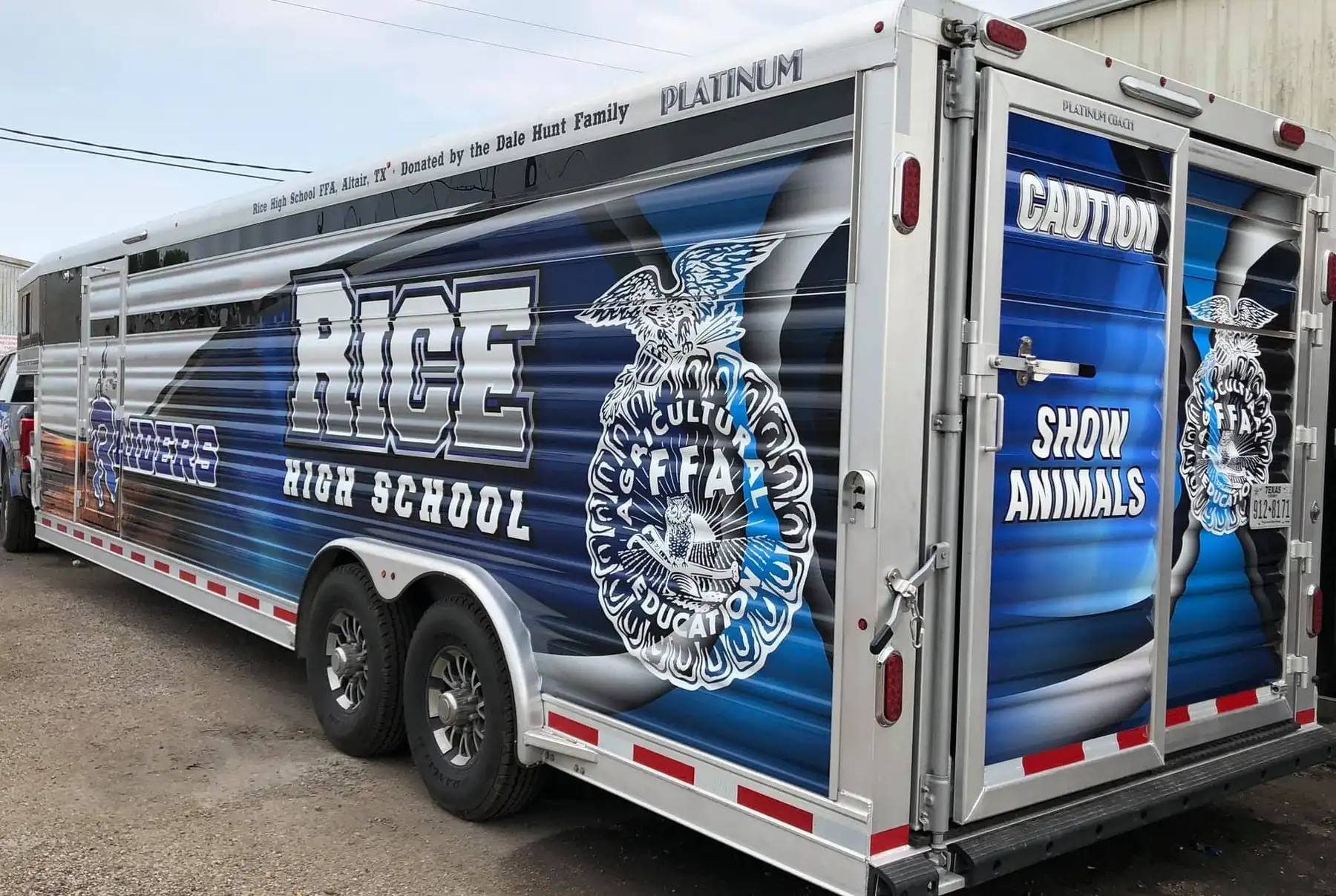
Most enclosed trailers are aluminum skin over a frame, with rivet lines every couple of feet, a side door, and hinges and latches on the back. Vinyl goes over rivets without trouble. The design is where the care goes.
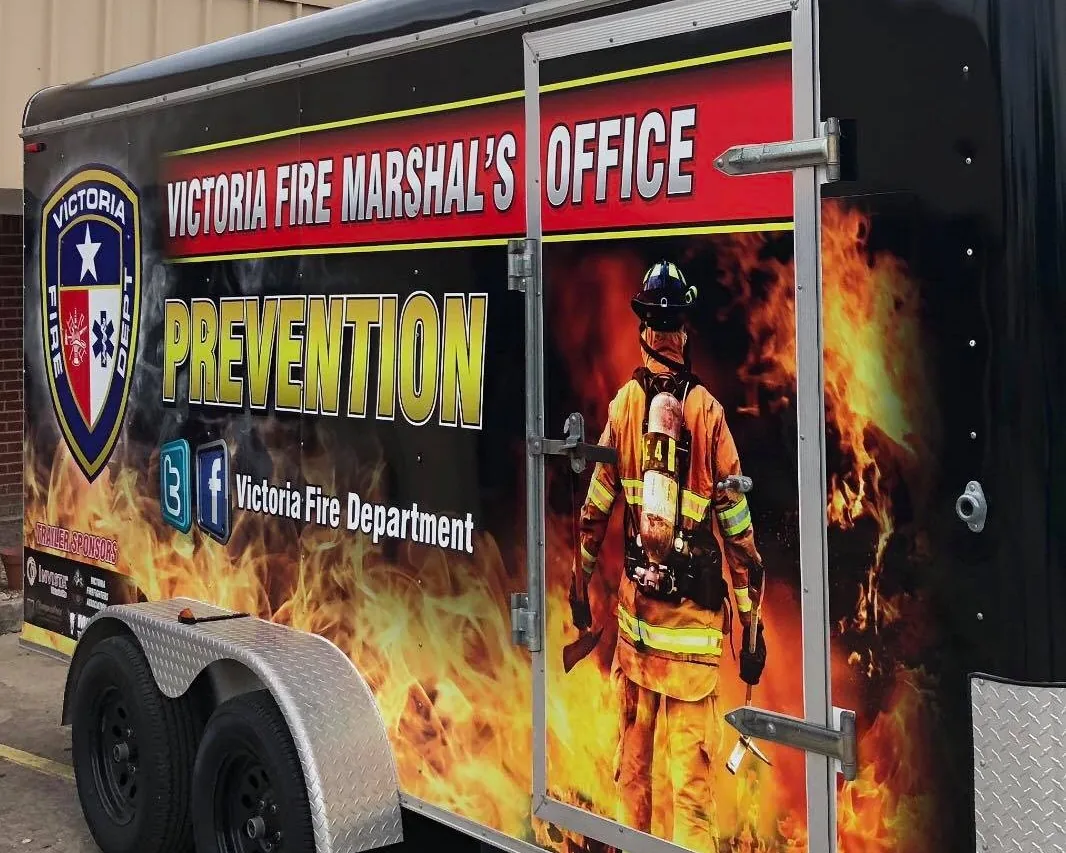
Before artwork starts, we measure where every seam, door gap, hinge, and latch sits. Then the text gets placed so a word never splits across a door gap and a phone number never runs over a rivet line where it would be hard to read. On the Victoria Fire Marshal’s trailer above, the banner crosses the side door, so the layout breaks the words at the door frame instead of through a letter.
Care and the warranty
Every trailer wrap we install is backed by The No-Peel Promise, one year of coverage on materials and installation. If an edge lifts, bubbles, or peels because of our material or our work, we fix it.
Hand washing is the way to keep a wrap looking right. Close-range pressure washing and automatic brush washes can lift edges, and that damage is not covered. Rock chips and scrapes from loading are not covered either, which is why we plan graphics around ramps, tie-downs, and the low panels that catch gravel.
Getting a quote
Bring the trailer to our Victoria shop on Nursery Dr, or start with photos. We serve San Antonio from the same shop. Send the measurements and pictures listed above through the contact form or call 361-730-1308, and we will price lettering, a partial wrap, and a full wrap so you can compare.
You can see more finished trailers on our trailer wraps page.